Impact on Health

Strategic Activities

The strategic activities in 2025 build on fundamental insights developed within Oncode Institute.

CPoC Program

Within the Clinical Proof of Concept (CPoC) program, the OEDES team (Oncode Exploratory Development Expert Support) supports researchers and clinicians in advancing promising projects from the lab to clinical trials.

The three projects selected in 2025, led by the Oncode Investigators listed below, focus on accelerating innovative applications for patients:

  • Geert Litjens: AI support to make Mohs surgery for skin cancer faster and more accessible.
  • Wouter de Laat: A fully non-invasive prenatal genetic test for families with hereditary cancer.
  • Wilbert Zwart: Using corticosteroids to restore the effectiveness of hormone therapy in metastatic breast cancer.

Insights thanks to patients
Oncode Institute also invested in gaining early insight into the value of innovations for patients and healthcare systems. For several CPoC projects, we investigated how new treatments can contribute to better, more affordable care and which development pathway offers the greatest chance of successful application in practice. Currently, 23% of the research groups collaborate structurally with patient representatives, who contribute ideas on research design, priorities, and the relevance of studies for clinical practice, and bring new perspectives to the table.

Meetings
During various meetings, patient representatives presented their views and experiences. They engaged in discussions with researchers during the Annual Meeting, the Oncode Investigator dinner, and other events. This approach was also shared outside Oncode Institute, for example, during a lunch meeting at ZonMw, where Oncode Institute, together with researchers and a patient representative, explained how patient participation is structurally embedded in research.

Clinical Workshops
To strengthen the connection between research and clinical practice, Oncode Institute organized two clinical workshops in 2025 focused on rare forms of cancer, such as myelodysplastic syndrome. The goal of these meetings was to present the challenges in the clinic, new insights and technologies in the lab, and discuss pathways that lead to new tools for patients.

Portfolio
The clinical portfolio now includes a broad mix of potential new therapies, combinations of existing drugs, drug repurposing strategies, optimization of treatment protocols, and diagnostic tests. These target both common and rare cancers, including pediatric cancers.

Wilbert Zwart
Oncode Investigator

Studies showed that corticosteroids, including cortisol, could reactivate hormone-therapy sensitivity in mice. The treatment essentially mimicked the effects of a strict diet, without requiring any calorie restriction.
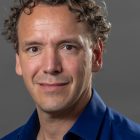
“These findings suggest that we may have uncovered a new application for this widely used and inexpensive medication, which may be able to replace or delay more intensive, expensive treatments,” says Zwart. “Without Oncode Institute, this study and its swift clinical translation simply would not have happened. Thanks to Oncode Institute’s CPoC program, we could quickly turn our discovery into a clinical trial, aiming to improve therapeutic options for patients using inexpensive, well-established medications.”

Results

The moment a scientific discovery enters clinical development marks a significant milestone in translating it into a treatment for patients. In 2025, two CPoC studies were completed. One of these was led by Hugo Snippert, who, together with his colleagues in the RASTRIC trial, developed a new treatment strategy for RAS-mutated colorectal cancer. This research is based on organoid research and combination therapy. Although the clinical results were limited, the study provided important insights into treatment resistance. The study demonstrated how basic research, patient models, and clinical trials can reinforce one another in the development of future cancer treatments.

Edwin Cuppen
professor of Human Genetics at UMC Utrecht and scientific director of Hartwig Medical Foundation, about Hugo Snippert’s CPOC study:

Even when outcomes are not what we initially hoped for, these studies provide essential insights that help shape the next generation of cancer therapies.

Impact & Future

The path to impact became clear in the continued growth of the clinical portfolio. This now includes 22 innovations in clinical development, ranging from new forms of immunotherapy and precision diagnostics to technologies for early detection and targeted cancer treatment. As a result, new treatment strategies are increasingly being applied in patients.

These developments demonstrate that we achieve an impact on health, not only by developing new medicines, but also through innovations that contribute to more efficient and sustainable care. This topic is becoming increasingly important due to rising demand for care, rising costs, and limited availability of personnel. In this light, it is becoming increasingly important to translate scientific knowledge not only into new medicines but also into smarter, more effective care. This also highlights the importance of a broader approach to valorization, in which the societal value model also plays a role.

Examples include Jacco van Rheenen’s research on better-timed chemotherapy based on hormonal cycles, Wilbert Zwart’s work on new applications for existing drugs, Jeroen de Ridder’s research on AI innovations such as Sturgeon, and Geert Litjens’ research, which contributes to faster and more accurate diagnostics and more efficient surgeries. These innovations can lead to better treatment outcomes, fewer complications, shorter wait times, and more efficient use of healthcare capacity.

Wouter de Laat
Oncode Investigator, UMC Utrecht

Wouter de Laat and his team aim to bring a fully non-invasive prenatal diagnostic (NIPD) blood test for families with hereditary cancer into clinical practice.

Prenatal diagnostics currently requires an invasive procedure with a small miscarriage risk and can only be done after 11–12 weeks of pregnancy,” says de Laat. “Families would benefit tremendously from a non-invasive test that only needs a blood draw from the mother and can be offered earlier, around week 8–10. Our goal is to develop a safe, simple, and future-proof NIPD method suitable for all couples at risk.

The Oncode Institute Patient Perspective Programme: bridging science and lived experience - patient engagement at the heart of cancer research

Cancer research does not happen in isolation. It unfolds in laboratories, clinics and increasingly in dialogue between researchers, clinicians and the people whose lives are directly affected by disease.

Within Oncode Institute, the Patient Perspective Programme was created to strengthen that dialogue. In this conversation, Sako Zeverijn (patient representative), Leila Akkari (group leader at the Netherlands Cancer Institute and professor at Leiden University) and Rachel Giles (patient engagement director at patvocates.net, a social consultancy agency, and president of VHL Europa) reflect on why collaboration between patients and researchers matters, and how it can be embedded more deeply into the culture of fundamental research.

Why collaboration matters
A patient’s perspective

For Sako, the importance of collaboration became personal ten years ago, when he was diagnosed with pancreatic cancer. Shortly afterwards, he also discovered that he carries a hereditary gene defect.

‘At first, I didn’t fully understand what that meant,’ he reflects. ‘But I soon realised that many treatments do not work - or do not work well - unless we truly understand the biology of the tumour. That understanding depends on fundamental research: work that investigates the origins and mechanisms of disease at a deep biological level. Yet such research often remains invisible to the wider public.’

‘People are always looking for the spectacular successes - from surgery and drugs - but do not fully comprehend the years of groundwork behind these successes. My own treatment depended on that groundwork.’

At the same time, he became aware that fundamental research is frequently underfunded and under-recognised. Speaking out as a patient representative became a way of giving that work a voice.

When asked whether patients should be involved in research more directly, he is cautious.

‘Patients do not necessarily have the expertise to dictate which areas should be studied,’ he explains. ‘We cannot responsibly say “you must research this”. But we can try to understand what scientists are attempting to achieve, and support them. It is about managing expectations. Scientific discovery often follows unexpected paths. Not everything can be predicted. But listening, understanding and sharing can help manage expectations and provide valuable insights.’

A researcher’s perspective
From Leila’s point of view as a researcher, patient engagement provides perspective.

‘As researchers, we can easily work in a bubble,’ she says. ‘We focus intensely on a specific pathway, cell type or cancer subtype. It becomes our entire world.’

Engaging with patients helps them see their research in a broader, real-world perspective. ‘When we explain our work in terms that are meaningful to patients, it forces us to reflect. It humbles and grounds us. It also opens our eyes to practical realities we may not have considered. In the laboratory, combining several drugs may appear scientifically logical. But hearing directly from someone who has undergone chemotherapy or immunotherapy changes how such strategies are perceived. It gives us a more realistic understanding of what treatment means in real life,’ Leila explains.

‘For a new generation of researchers, this connection with the real world is particularly powerful. A single project may feel like a small step,’ she says. ‘But it contributes to a larger effort to build a wall against cancer. Meeting patients reminds young scientists - and also the experienced ones - why they are doing this work. It brings the human dimension back into focus.’

A dual perspective
Rachel brings a dual perspective as both a scientist and patient advocate.

‘I grew up in a family with a hereditary tumour syndrome, so I saw the invisible burden of disease early on. For that reason I became a scientist, and led a research group because I wanted to help develop treatments for people like my family.’

She subsequently left her job as an associate professor to work as a professional patient advocate at European level.

‘Along the way, I realised that if we want research to translate effectively, we must systematically collect and use patient data,’ Rachel explains. ‘Regulatory authorities, including the European Medicines Agency (EMA), now recognise the importance of patient experience data. Decisions about approval and reimbursement increasingly consider not only clinical efficacy, but also quality of life and lived experience.

I sometimes joke that I am now a qualitative and social scientist. It’s a very fulfilling role. I work with patient organisations to teach them how to collect data and make them “research-ready.” There is growing evidence that early patient engagement improves outcomes. It can increase enrolment in clinical trials, improve protocol design and reduce costly amendments later on. It is not simply a moral argument, it is also practical. Early engagement - even at the earliest stages of fundamental research - benefits patients and makes research and development more efficient.

At the same time, collaboration requires preparation on both sides. Patients must be trained to participate in regulatory processes independently, without bias. Researchers, too, need to learn how to communicate clearly and meaningfully. True collaboration works in both directions,’ Rachel emphasises.’

The role of the Oncode Institute Patient Perspective Programme
For Sako, the programme’s primary role is clarity - and connection: ‘I think its main importance is helping patients understand what is happening in the research field. What areas are being studied, and how they fit together. That’s not always visible from the outside.’

At the same time, he believes researchers can learn just as much from patients.
‘Undergoing treatment, being ill - that brings challenges researchers may not fully see. Until I became ill myself, I had never really spoken to a cancer patient in depth. I knew very little about what it actually meant. And I imagine that is true for many researchers as well. We may know patients within our families, but we don’t always talk about their experience in a way that builds real understanding.’

Beyond dialogue, he sees another important function: giving fundamental research a voice.

‘There is great and indispensable value in fundamental research. Therefore, continued funding and support are absolutely essential. Without funding, there is no research at all. Researchers can argue for funds, of course, but they are also the beneficiaries. Patients can speak from a more neutral position and say: we believe this work matters, even if we do not fully understand every detail.’

Sako became involved after his own diagnosis and through personal connections to the research community. He saw it as an opportunity to contribute.

‘Fundamental research comes with uncertainty. There are no guarantees about outcomes or timelines. That is something we have to accept. I can’t be sure whether the programme “works” in a measurable way, but I can try to add something that helps move it forward. At the very least, it keeps attention on the importance of fundamental research.’

Leila sees the programme as an integral part of Oncode Institute: ‘Oncode Institute has a strong foundation in fundamental science, but also the ambition to translate discoveries into clinical applications faster. The Patient Perspective Programme helps bridge that space.

As a researcher, from the moment you start thinking about a new idea, you should feel you can involve the programme straight away. Like a “plug and play” approach, enabling researchers to engage with it easily - that is key. For example, all students should be introduced to the programme early on, so they automatically consider questions as: “Who are the patient representatives?”, “What are they interested in?”, “What can they teach you, and what can you share in return?” at the start of their thinking process. That kind of exchange makes the collaboration real.

Hearing directly from patients remains one of the most powerful aspects. Even when our work feels very fundamental and far removed from the clinic, patients are interested. And the perspective they give us - about their journey and the challenges they face - is incredibly enlightening.’

Building on Leila’s description of a ‘plug and play’ approach, Rachel agrees that it should become a natural and visible part of research practice.

‘It shouldn’t feel like an add-on,’ she says. ‘It should simply be part of how we work.’ For her, that means integrating collaboration into everyday academic milestones. ‘If you’re excited about a paper and about to submit it, why not involve a patient representative in writing the cover letter to the editor? Imagine the impact of explaining why that research matters from a patient perspective. That adds a powerful dimension.’

She also sees patient engagement as a meaningful differentiator for researchers: ‘When you’re applying for promotion, what sets you apart? Showing genuine collaboration with patient organisations demonstrates that you understand the broader relevance of your work.’

But the exchange must be reciprocal: ‘It’s a give and take. Researchers can share important findings with patient communities. Patient organisations can contribute lived experience and data that may influence whether a treatment is ultimately approved and reimbursed. If collaboration begins early - rather than at the final stages, the connection between discovery, regulation and real-world impact becomes much stronger.’

A closing reflection
Throughout the conversation, one conclusion becomes clear: collaboration is not a symbolic gesture, but a structural necessity. Fundamental research depends on public trust and long-term support. Patients seek progress grounded in real-world experience. The Oncode Institute Patient Perspective Programme provides the framework for this collaboration and exchange of perspectives. It brings together scientific discovery and lived experience - clarifying the path from discovery to real-world impact.