Strategic Activities
In 2025, we continued to build the Oncode Institute community. Through our annual events, including the Annual Meeting and Annual Conference, and a series of technical and clinical workshops, we provided a platform for sharing new insights, forging new collaborations, and defining new lines of research. In 2025, we also saw growing engagement from researchers and clinicians outside the Oncode community. Examples include the “rare cancer” workshop and the Eureka Institute course focused on pediatric cancer. Additionally, Oncode Investigators, together with the Dutch Cancer Agenda (NKA), explored the themes through which Oncode Institute can contribute to Dutch cancer research.
Oncode Institute invested in talent development and the sustainable employability of researchers. The Oncode Institute Career Event connected young researchers with professionals from industry, entrepreneurship, and policy, among other fields, and supported them in exploring career paths both within and outside academia.
An example of this is Oncode Institute’s involvement in international collaborations such as Cancer Grand Challenges. Within Team CAUSE, which received funding in 2026, we brought researchers and patient representatives together at an early stage to link fundamental research on DNA damage and cancer with societal and future clinical impact.
In 2025, we laid the groundwork for new public-private partnerships and translational projects. A concrete example of this is the collaboration between MRM Health, Oncode Institute, and the Netherlands Cancer Institute, in which Oncode Investigator Emile Voest’s research on the microbiome is central to improving the effectiveness of immunotherapy.


Puck Knipscheer
Oncode Investigator
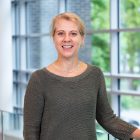
“CAUSE (the Cancer Grand Challenges program initiated in 2025) is fundamentally driven by curiosity and deep mechanistic science, which makes meaningful patient involvement both challenging and essential. By working closely with patient advocates from the very beginning, we are constantly reminded why understanding DNA damage and mutation processes matters , not only scientifically, but ultimately for patients and future cancer care.”
Emile Voest
Oncode Investigator
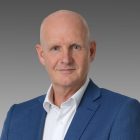
“Our research has shown that the gut microbiome and its metabolites play a critical role in shaping immunotherapy responses,”says Prof. Emile Voest. By partnering with MRM Health, we can translate these insights into innovative therapeutic strategies that may help overcome resistance and unlock the full potential of immunotherapy.”
Established partnerships: KiKa and Alpe d'HuZes/KWF
In 2025, Oncode Institute launched a strategic partnership with the Children Cancer-Free Foundation (KiKa) to accelerate research into childhood cancer. By joining forces, we are strengthening the bridge between basic research and clinical practice, with a shared ambition: every child cancer-free. We are moving toward a funding model of 2 million euros per year starting in 2028.
Jakolien van Eijk
Executive Director of KiKa

“To truly make a difference for children with cancer, we must quickly translate promising scientific insights into practical breakthroughs. Oncode Institute is highly skilled at guiding researchers through this process. That is why I am incredibly pleased that we have launched this new partnership.”
With support from the Alpe d’HuZes/KWF Fund, Oncode Institute is receiving an additional investment of 4.5 million euros to accelerate innovative cancer research. This boost enables the rapid launch of new, high-risk research lines and strengthens collaboration among young researchers.
Erik Jutstra
Chairman of Alpe d’HuZes
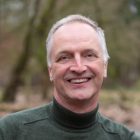
“Alpe d’HuZes is all about connection and coming together to make a difference for people with cancer. With this boost, we can make targeted investments in research that helps accelerate studies offering new perspectives.”
Our impact at Alpe d’HuZes 2025
During Alpe d’HuZes 2025, more than 150 researchers, staff members, partners and supporters of Oncode Institute came together to support cancer research. Across 18 teams, they climbed Alpe d’Huez under the motto:
“We’re climbing the mountain for cancer research.”
Together, they raised more than €350,000 for research that contributes to better treatments and more perspective for patients. Their participation reflects the strength of collaboration and the strong connection researchers feel with patients and their loved ones. By taking part in Alpe d’HuZes, they underline their commitment and motivation to make a difference in the lives of people with cancer through fundamental research.

Results
In 2025, Oncode researchers collectively published more than 330 articles. Over 91% of these publications are Open Access, which increases their visibility and accessibility.
In 2025, Oncode Investigators collectively received more than 100 grants and awards, totaling over 45 million euros in research funding for the research groups at Oncode Institute.
Of these, 12 grants came from talent programs of the Netherlands Organization for Scientific Research (NWO) and the European Research Council (ERC), as well as the Spinoza Prize, the SITC Award, and the Ammodo Science Award. In addition, Oncode Investigators received several large-scale international and public-private grants.
An example of a public-private partnership, in which researchers and companies collaborate on nanomedicines to make tumors more visible for immunotherapy, is the SPARC project. This was selected in 2025 for funding from the NWO Perspective Program. Oncode Institute is a partner.
Miao-Ping Chien
Oncode Investigator

“Many patients still don’t benefit from immunotherapy because their tumors remain hidden from the immune system. With SPARC, we aim to change that. By combining expertise from so many partners and developing technology that makes tumors more visible, we hope to make this treatment work for far more people. I’m proud that Oncode Institute can contribute to this collaborative effort.”

Impact & Future
By investing strategically in excellent fundamental research and collaboration, Oncode Institute continues to contribute to scientific breakthroughs with societal and clinical impact. In 2025, the quality, relevance and impact of its research output once again ranked among the absolute global top of research institutes in the life sciences and biomedical sciences, performing at a level comparable to the world’s top two research institutes. This is reflected in an independent citation analysis of scientific publications by the CWTS Leiden Ranking 2025.
In 2025, Oncode Investigators once again provided important scientific insights across various domains of cancer research. Below, we highlight a few examples.
Researchers led by Thijn Brummelkamp discovered a new vulnerability present in approximately half of all cancers. Leila Akkari gained new insights into how tumor cells and the immune system interact. Research by Geert Kops contributed to a better understanding of how errors arise during the distribution of genetic material in cells, a process that plays a key role in cancer.
Oncode researchers also gained new insights into why some tumors become resistant to treatment. The research group led by Ronald Kanaar and Arnab Ray Chaudhuri investigated how certain tumors can repair DNA damage, making chemotherapy less effective. These insights can help develop new treatment strategies.
In addition, our researchers are advancing toward clinical application. Agustin Enciso-Martinez developed a method to visualize hard-to-detect signals from tumor cells in blood. This approach could contribute to earlier diagnosis and better monitoring of cancer in the future.
These examples illustrate how basic research at Oncode Institute contributes to new insights and the further development of applications for patients. Combined with the attraction of external funding, these research results demonstrate that the strategic focus on excellent basic research and collaboration is bearing fruit both within and beyond the Oncode Institute community.
Agustin Enciso-Martinez
Oncode Investigator
On research into tumor-derived extracellular vesicles in blood, which can make previously hard-to-detect signals from tumor cells visible for future applications in early cancer diagnosis and monitoring:
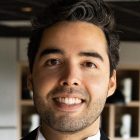
“This promising technique could significantly improve the way we diagnose and monitor cancer across multiple tumor types.”
Arnab Ray Chaudhuri
group leader at Erasmus MC

“By understanding how cancer cells find alternative ways to repair DNA and survive treatment, we can begin to design therapies that make resistant tumors vulnerable again.”